



Ankle arthrosis is a chronic pathology in which degenerative-dystrophic changes develop in the joint.First, thinning of the articular cartilage and its destruction occurs, then the joint capsule, synovial membrane, as well as the bones that form the joint, ligaments and adjacent muscles are involved in the pathological process.
The causes of the pathology are very different - from excessive stress to metabolic disorders, often combined.But in some cases, degenerative-dystrophic changes in the ankle joint develop for no apparent reason.
The disease worsens the patient's quality of life - he cannot walk normally due to pain and limited movement in the joints.
Treatment, as a rule, is conservative - with the use of chondroprotectors ("protectors" of cartilage) and hormonal drugs.But in advanced cases, surgery may be required.
General information
Ankle arthrosis is an unpleasant disease - the articular cartilage and tissues adjacent to the joint are destroyed slowly but surely, leading the patient to disability.
Pay attention!
The disease progresses in waves - periods of exacerbations alternate with periods of remission, but the progression of the pathology is inevitable.

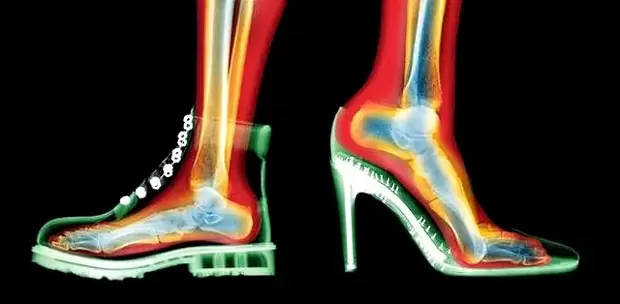
Women and men get sick with approximately the same frequency.Men put more strain on their ankles during sports and heavy physical work.But, the statistics on the women's side "concur" because the ankle joint suffers from terribly uncomfortable and sometimes completely inappropriate shoes, especially high heels.
The chances of developing this pathology increase with age.Meanwhile, in the last 10-20 years, the disease has become "younger" - according to statistics, every third case of ankle arthrosis is observed in patients under 46 years old.
Causes of ankle arthrosis
Ankle arthrosis is divided into two groups - primary and secondary.
The main form of the pathology appears for no apparent reason.Secondary arthrosis of the ankle joint is formed:
- under the influence of negative factors that directly affect the joint;
- against the background of any pathology that can lead to metabolic disorders and thus contribute to the development of degenerative processes in the articular cartilage.
Several etiological factors are still being tested for involvement in the occurrence of the pathology.However, a group of factors has been identified whose role in the occurrence of ankle arthrosis has already been proven.These are:
- major injuries of the ankle joint with or without involvement of the surrounding tissues;
- regularly received microtraumas;
- overweight;
- ankle surgery;
- excessive physical stress on the joints;
- inappropriate shoes;
- pathologies associated with metabolic disorders;
- diseases of a rheumatic nature;
- some pathological conditions of the spine;
- hereditary predisposition.
Somewhat less often, pathologies such as:
- nonspecific purulent arthritis;
- arthritis caused by some specific infections;
- congenital malformations of the ankle joint.
Of all the main ankle injuries, the following types of injuries are most often the background for the development of arthrosis:
- ankle fractures;
- fractures of the tail of the teeth;
- tears and ruptures (incomplete tears) of ligaments and some others.
By regularly received microtraumas that lead to the formation of the described pathology, we mean ankle bruises, which can most often be observed:
- when you play football;
- with occasional regular obstacles while walking;
- due to the weakness of the ligamentous apparatus of the ankle joint, which contributes to the spontaneous twisting of the leg, etc.
If you are overweight, the ankle joints feel the static load more than others, which contributes to the development of a degenerative-dystrophic process in them.
Surgical interventions in the ankle joint often lead to the fact that the natural shape of the leg is disturbed, the nature of the load on its various fragments changes, because of this, the articular cartilage feels an increased load - as a result, arthrosis of the ankle joint is formed.
Excessive physical stress on the joint, which contributes to the development of the described disease, is observed when:
- employment related to heavy physical work (for example, porters, porters);
- regular standing in a static standing position (for military honor guards, security guards of institutions);
- playing sports very intensively;
- long walks and so on.
Important!
Wearing ill-fitting shoes contributes to the development of ankle arthrosis, as it leads to improper load on the feet - falls mainly on the ankle joint.Often these are high-heeled shoes, but low-heeled shoes that are not made to fit the shape of the foot can also lead to such consequences.
Metabolic disorders play a direct role in the formation of ankle arthrosis - first of all, it is a failure in water salt metabolism, which contributes to the development of degenerative-dystrophic changes in the articular cartilage.In the later period of the development of the pathology, a similar change in other ankle structures plays a role - mainly the ligaments.Due to tissue disorders, they are not able to fix the joint in a normal position, which causes its special "looseness", the load distribution in the joint structures differs from normal.Such processes contribute to the further development of degenerative-dystrophic changes.
Of the diseases and other conditions related to metabolic disorders, the biggest role in the occurrence of ankle arthrosis is played by:
- diabetes mellitus is a disorder of carbohydrate metabolism that develops due to the lack of the hormone insulin;
- gout is a pathology characterized by the deposition of urates (uric acid salts) in the joints;
- pseudogout is an acute inflammatory joint lesion that occurs due to the deposition of calcium pyrophosphate crystals (CPPC) in joint tissue.According to clinical signs, the pathology is similar to gout, but it is not - hence the name;
- lack of estrogen during menopause.
Of all rheumatic diseases, the most important for the development of ankle arthrosis are:
- systemic lupus erythematosus is a diffuse autoimmune lesion of the connective tissue and its derivatives;
- Rheumatoid arthritis is a systemic autoimmune disease of the connective tissue, in which the small joints are mainly affected and their damage develops as an erosive-destructive polyarthritis (ie with the appearance of multiple small surface injuries and the destruction of the joint tissue).
Somewhat less often, pathologies such as:
- nonspecific purulent arthritis - inflammatory joint damage with the development of a purulent process;
- arthritis that appears against the background of some specific infections - syphilis, tuberculosis and others;
- congenital malformations of the ankle joint - hypoplasia (underdevelopment) of the elements (ligaments) of its bones and soft tissues, intra-articular adhesions, formation of connective tissue strictures, etc.
Of all the diseases and pathological conditions of the spine, the most important for the development of ankle arthrosis are:
- osteochondrosis of the lumbar spine - degenerative disorders in the cartilage that lead to deterioration of its function;
- intervertebral hernia - a pathology of the spine in which the nucleus pulposus of the intervertebral disc is displaced by rupture of the fibrous ring;
- spine injuries - bruises, damage to the ligamentous apparatus, subluxations and dislocations of the vertebrae of various parts of the spine, their fractures (including compression ones);
- consequences of spine injuries - instability of the injured part, scoliosis and kyphosis (curvature in different planes), degenerative changes in intervertebral discs, joints and ligaments, deformation and narrowing of the spinal canal, compression (squeezing) of the spinal cord and others.
The role of such pathologies is that their development is accompanied by compression of nerve endings and, as a result, breakdown of the muscular system of the foot and lower leg.Against the background of such disorders, the load on the ankle joint changes - this ultimately results in the described disease.
The role of hereditary predisposition in the formation of ankle arthrosis is very indirect.We are not talking about any empirical gene that would "cause" the formation of arthrosis in the ankle joint.A person will inherit a certain type of cartilage tissue from his parents - it can be weak and more prone to the development of degenerative-dystrophic processes, which contributes to the formation of the described disease.
Development of pathology
The articular surfaces of the ankle joint (as well as others) are normally smooth and elastic, with elasticity.The smooth surface allows them to slide smoothly over each other, and the elasticity provides shock absorption in case of joint stress.
If the articular cartilage is traumatized, or the metabolic processes in its tissues are interrupted, the surface of the cartilage becomes rough and loses its elasticity.The cartilages of the articular surfaces no longer slide, but literally rub against each other.This leads to secondary mechanical trauma of the articular cartilage and deterioration of its functions.
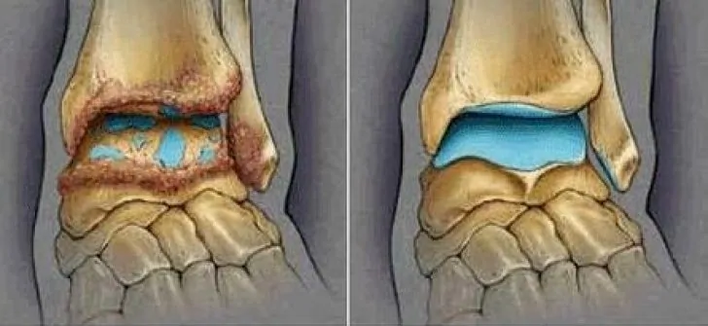
The ankle joint can no longer function as before.Due to the decrease in elasticity, the cushioning deteriorates, so with increased load it is also felt by the lower bones, the ends of which participate in the formation of the ankle.As a result, a degenerative-dystrophic process also begins in the bones - in this case, the ends of the bone are deformed, and the edges of the articular area grow (a compensatory mechanism is turned on - the body tries to cope with the degeneration of joint tissues in this way).
Secondary trauma and interruption of mechanical processes in the ankle joint during its operation (bending and extension) leads to the fact that not only the articular cartilage and the underlying bones suffer, but also the soft tissues surrounding the joint.The following processes occur in them:
- capsule and synovial membrane become thicker;
- Foci of fibrosis are formed in the ligaments and muscles involved in the functioning of the joint.
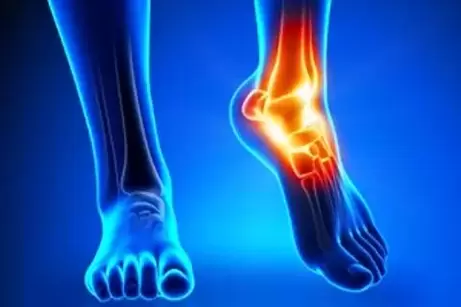
Due to all the described processes, the ankle joint eventually loses stability, its ability to participate in movement deteriorates and it can withstand loads more and more poorly.As a result, instability and stiffness of the joints occurs.In advanced cases, the articular surfaces are literally destroyed, the bones come into direct contact with each other, which makes joint movements completely impossible, the person cannot even stand on his feet.
Sometimes an inflammatory process can be combined with degenerative-dystrophic disorders, but in this case it is of a secondary nature.
Symptoms of ankle arthrosis
The first symptoms of ankle arthrosis are:
- his rapid fatigue under the same loads (walking, jumping, and so on);
- inexpressible pain after significant exercise.
Due to the steady progress of arthrosis, the pain becomes more and more intense and then appears at night.Pain syndrome with arthrosis of the ankle is characterized by several features:
- the presence of the so-called initial pain - the pain appears as soon as the patient begins to move after a state of rest and disappears when moving;
- when moving the joints, in addition to squeaking, crackling and clicking may occur;
- Night pains occur mostly in the morning.
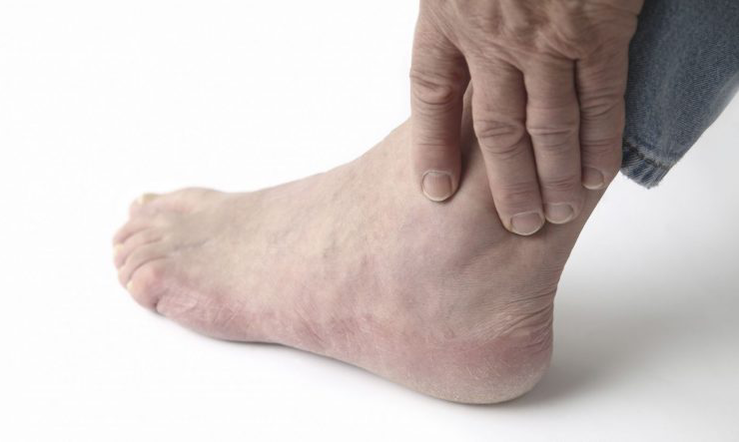
With further progress, the following symptoms appear:
- the formation of visible deformation of the joint;
- reduced range of motion;
- swelling of soft tissues and redness of the skin;
- joint instability, which causes ligament sprains and even tears;
- stiffness and limitation of movements - occur against the background of pain and due to the fact that the articular cartilage no longer slides, but rubs against each other.
Pay attention!
In the later stages, the deformity of the ankle joint becomes severe, and the lower leg may even bend and take an X or O shape.
If the loads are kept at the same volume and no therapeutic action is taken, in the later stages the patient cannot stand on his feet, the movements in the joint are severely limited, the patient is forced to walk with a cane, and then even with crutches - the pain syndrome and the marked limitation of movements in the ankle joint do not allow it to be "used" as before.
Diagnosis of ankle arthrosis
It is difficult to make an accurate diagnosis based only on patient complaints, so additional diagnostic methods will be needed.
Physical examination data depends on the degree of progression of the pathology:
- after examination - in the initial stages the joint is not changed, but as the disease progresses, it is deformed;
- during palpation (palpation) - in a passive state the joint is moderately painful, in the initial stages passive movements are moderately limited, as the disease progresses, the patient unconsciously pulls the leg from the doctor's hands from pain when he wants to check the range of motion in the ankle joint.
Instrumental research methods used in the diagnosis of ankle arthrosis are:
- x-ray - with arthrosis, a narrowing of the joint space, the spread of the edges of the articular surfaces is revealed, with progression, cysts and sclerosis of the bone tissue are observed;
- computed tomography (CT) - in complex cases, allows you to assess the condition of cartilage and bones;
- Magnetic resonance imaging (MRI) - used to assess the condition of the soft tissues of the joint.
Laboratory research methods do not play a special role in the diagnosis of ankle arthrosis.A general blood test is informative - it allows differential diagnosis between a degenerative-dystrophic process in the ankle joint and an inflammatory one (in the latter case, the number of leukocytes and ESR will increase).
Differential diagnosis
The differential diagnosis of ankle arthrosis is most often performed with its arthritis.
Complications
The main complication of arthrosis of the ankle joint is contracture - stiffness, which with the progression of the pathology can turn into complete immobilization of the joint.
Treatment of ankle arthrosis
Treatment of ankle arthrosis requires a lot of time and an integrated approach.During the remission period, patients are treated on an outpatient basis with observation by the attending physician;during the exacerbation period, they are admitted to the department of traumatology and orthopedics.
The main points in the treatment of the described pathology are:
- adjustment of the load on the joints;
- drug therapy aimed at preventing further destruction of articular cartilage and preserving it;
- physiotherapeutic effect.
Adjusting the load on the affected joint is as follows:
- weight loss at the optimal level;
- load dosing.A complex of exercise therapy is prescribed - the exercises and the load as a whole are selected based on the stage of the disease.
The basis of drug therapy is as follows:

- chondroprotectors are drugs that prevent the progressive destruction of articular cartilage by improving metabolic processes in its tissues.Chondroprotectors are used in the form of creams and gels, as well as preparations for intra-articular administration.In this case, products containing glucosamine and collagen hydrolysis are often used;
- drugs that improve local blood circulation and tissue metabolism - these are nicotinic acid and others;
- non-steroidal anti-inflammatory drugs - used to eliminate reactive inflammation.Since they irritate the stomach lining, you should either use mild medications or use anti-inflammatory drugs in the form of ointments;
- pain relievers in the form of ointments and gels;
- intra-articular blockade - during them, corticosteroids are injected into the joint.Blocking should be done no more than 4 times a year.
Good treatment results are observed when physiotherapeutic methods are used - these are:
- UHF;
- magnetic therapy;
- laser therapy;
- phonophoresis;
- electrophoresis;
- ozokerite and paraffin applications.
In advanced cases, when conservative therapy is not effective, surgical correction of the pathology is directed.The following methods are used:
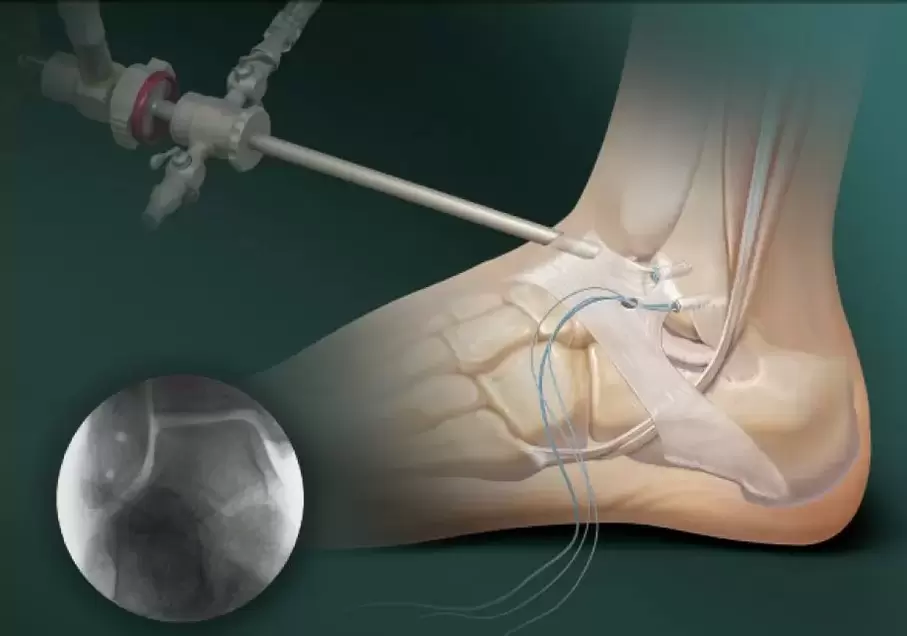
- hygienic arthroscopy - an arthroscope is inserted into the joint cavity, with its help the remains of cartilage and osteophytes are removed;
- arthrodesis of the ankle joint - performed when there is significant destruction of the articular surfaces.In this case, the joint is removed, the bones of the foot and lower leg are "joined".The method allows you to relieve the patient from pain and restore the supporting function of the leg, but the natural activity of the lower limbs will be impaired;
- endoprosthetics - during it, damaged articular surfaces are removed and a prosthesis (plastic, ceramic or metal) is placed.Thanks to this operation, movement in the joint is completely restored.The service life of modern prostheses is 20-25 years, even more with gentle treatment.
Preventing
To avoid the development of degenerative-dystrophic processes in the ankle joint, you should follow the following recommendations:
- avoiding joint damage;
- removing excess weight;
- gentle, competent implementation of surgical interventions on joints;
- dosage of physical activity;
- wearing comfortable shoes;
- prevention of ankle arthritis and its congenital pathologies, metabolic diseases and rheumatism, spine diseases and if they are present, timely detection and treatment.
PREDICTION
The prognosis for ankle arthritis is complex.Degenerative-dystrophic disorders cannot be "reversed" and the articular cartilage restored to its previous state, but the pathological process can be slowed down and with some efforts, the progression can be reduced to a minimum.This will require early intervention by doctors.Competent recipes will allow you to extend the "service life" of the ankle joint.